
Unplugging (from the matrix)
The latest trend, which I will happily follow

This week I decided to go back to using a flip phone after nearly a year with a smart phone. At first I was going to write about why I made this switch, but -to my surprise- it appears someone beat me to it. And by someone I mean the internet. I’m late to the dumbphone party apparently, and it feels like I have walked into my favorite fringe coffee shop for a peaceful cup of tea, only to find it packed with tote-bag-carrying hipsters, nerdy college kids, and influencers. (I fall into those first two categories unfortunately)
Throughout my journey of landline, to flip phone, to smart phone, and back to flip phone, I remained pretty chronically offline. Which is the internet’s new favorite buzzword it seems. With everyone either talking about offline content or making offline content, and ‘offline core’ and ‘digital detox core’ content being slurped up like an iced matcha; 2026 has been announced The Year Of Analog.
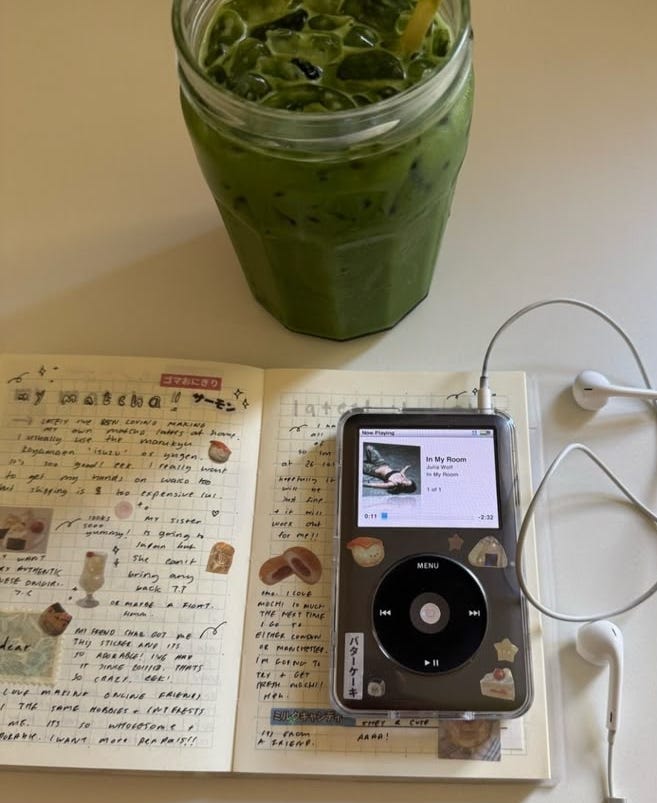
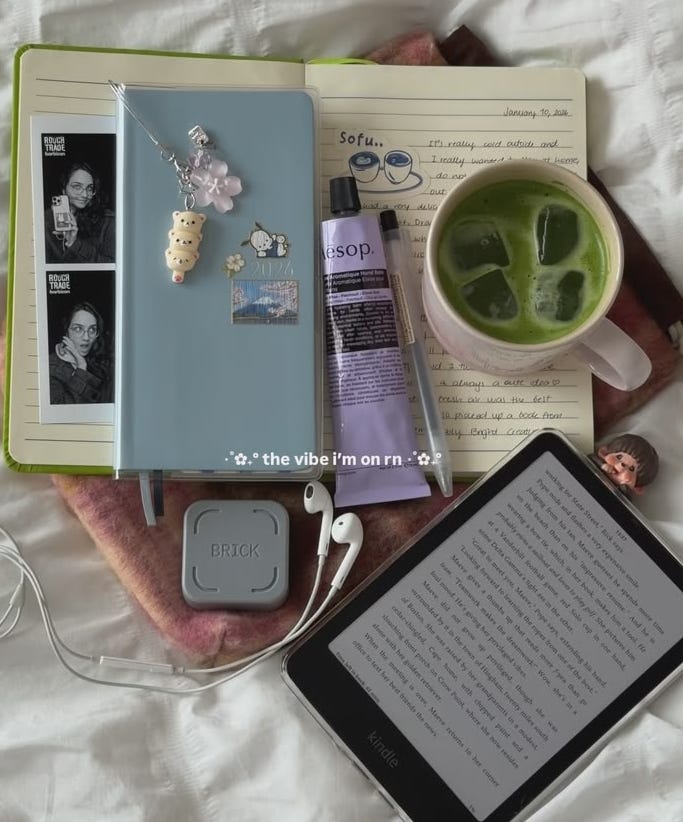
At first I wanted to call this shift back in time the plot twist of the decade. Especially regarding Gen Z (and Gen Alpha). I mean we were practically raised on the internet, and now we’re rejecting it en masse?? (or at least appear to be)
As Ash Callaghan talks about in this video, and Charli Chats and Jonah Lafferty discuss in this video, flip phones and living ‘analog’ (the word people are incorrectly using to mean offline) has grown to be another trend; an aesthetic in itself.
On the surface it seems like an unlikely direction for the zeitgeist to go, but this has been brewing for longer than you may think.
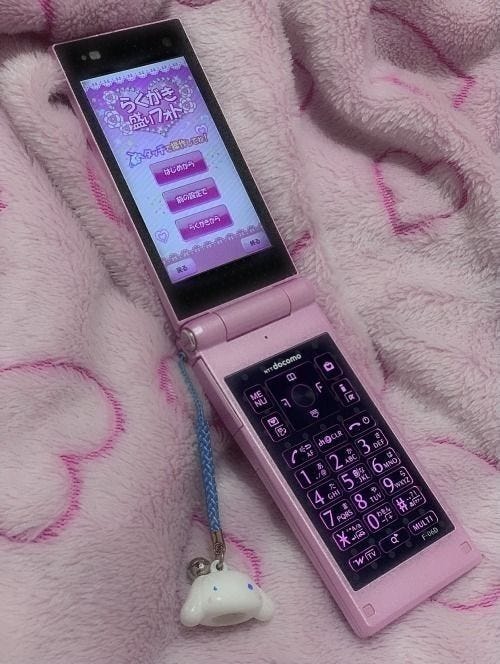
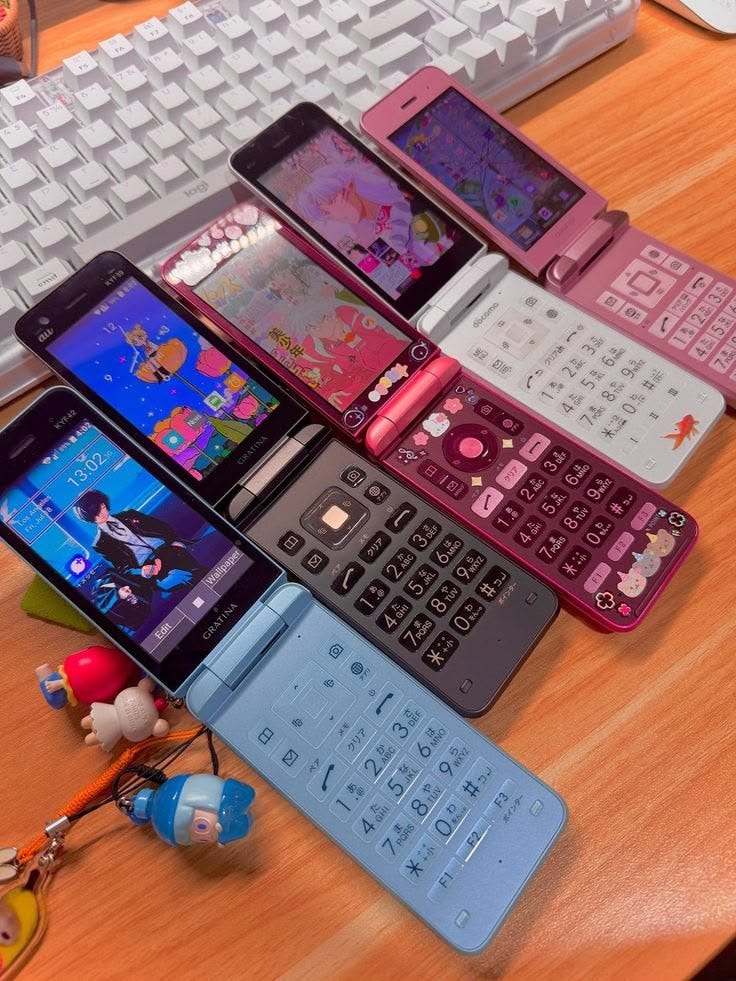
The irony is thick as influencers are filming their analog life on their smart phone and then posting about getting off social media… on social media.
Not to mention most of these ‘dumbphones’ really aren’t that dumb. Most flip phones have access to the internet, and even social media. I was hard pressed to find a phone that didn’t have YouTube pre downloaded, and even with the one I have now I can access YouTube through the web browser. (although it’s too much of a pain in the ass to be worth it)
Even so, analog life, digital detoxing, and performative reading have apparently become the latest status symbol, for influencers and celebrities alike. (read more about performative reading here)
These trends always have a certain problematic aspirational air to them that tends to leave me suspicious. Why is spending time offline suddenly so hot? (and cool at the same time… ?!)
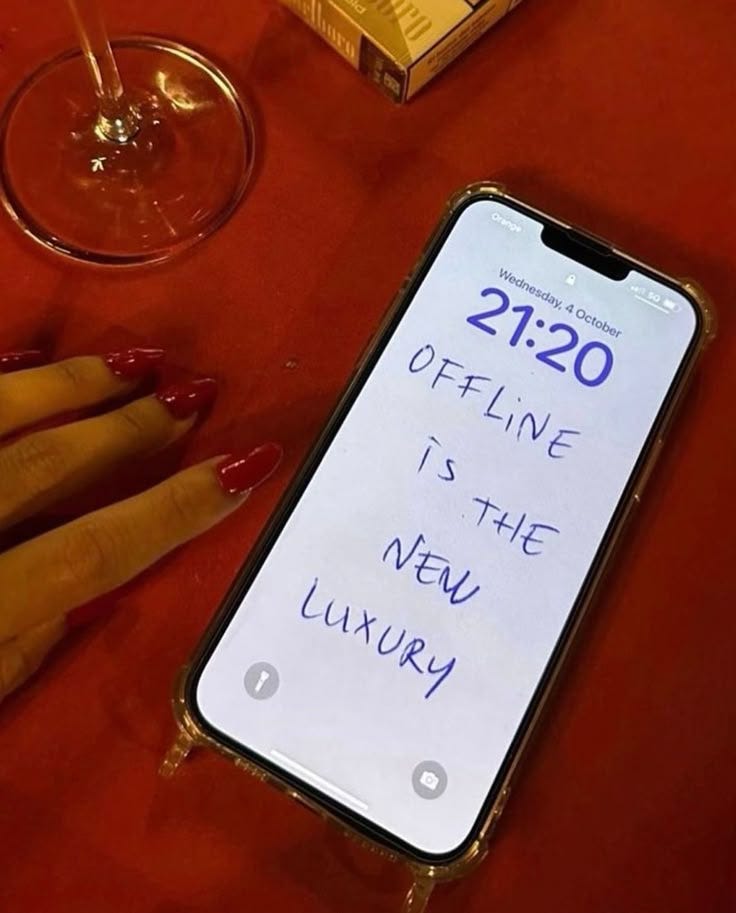
Offline is the new luxury
Headlines everywhere from the past couple years are claiming that ‘offline is the new luxury.’ Yet this has been a concept for a while. A VPRO documentary from 2016 titled -you guessed it- ‘Offline if the new luxury’ seems like a marker of a prominent turning point; perhaps the first wave of people actively rejecting new tech. But if being offline was considered a luxury then, why did it take so long for it to become a trend?
In this video by Levi Hildebrand titled, Why everyone is going offline now, he says; “One of the most interesting parts about this new offline trend that we’re seeing is that it’s not necessarily about health outcomes… It’s because being online is not even cool anymore… This is a shift that puts greater social value on lived experience than digital ones.” He later goes on to say; “In 2005 like half the people I knew had computers at home, maybe, and dialup internet was still common at that time. It was only the richest parents at my school that had home computers, and it was only the richest kids who got phones. But here we are twenty years later and basically everyone has a smart phone nowadays. But the people who have all the money are going offline.”
That’s the thing though, trends are almost exclusively status symbols; symbols of wealth. In 2016, going offline may have been a luxury, but it wasn’t ostentatious as it is today.
Being offline used to be hard, but now, it’s much more than a challenge. It costs you.
When the average person needs to make their life as convenient as possible to survive while raising kids, working multiple jobs, keeping up with increasing inflation and cut government assistance; owning a smartphone, being constantly available and on call, and keeping up with emails, becomes nearly essential; and free time is non-existent.
In today’s society and struggling economy, having the time to lounge in a park, reading and listening to music on a $500 iPod, is indeed a statement of affluence, one that places you in a special rung on the social hierarchy.
An Avenue For Consumerism
The first step in achieving an analog lifestyle, according to influencers, is acquiring all the gadgets. You’ll need a dumbphone, an iPod, a camera, a GPS, a set of matching notebooks and journals, a record player, and all your favorite shows and movies on DVD. Oh, and a hobby of course. As your stack of books piles up though, so do the costs.
In another video by Levi Hildebrand, The Analog Trend Has Already FAILED; he talks about how the analog trend has become another reason to buy more things. Influencers are still posting shopping hauls and ‘what’s in my bag’ videos, but repackaging them as ‘building an analog life.’ With some even renting out special ‘offline cabins’ or spending hundreds if not thousands on ‘digital detox retreats.’
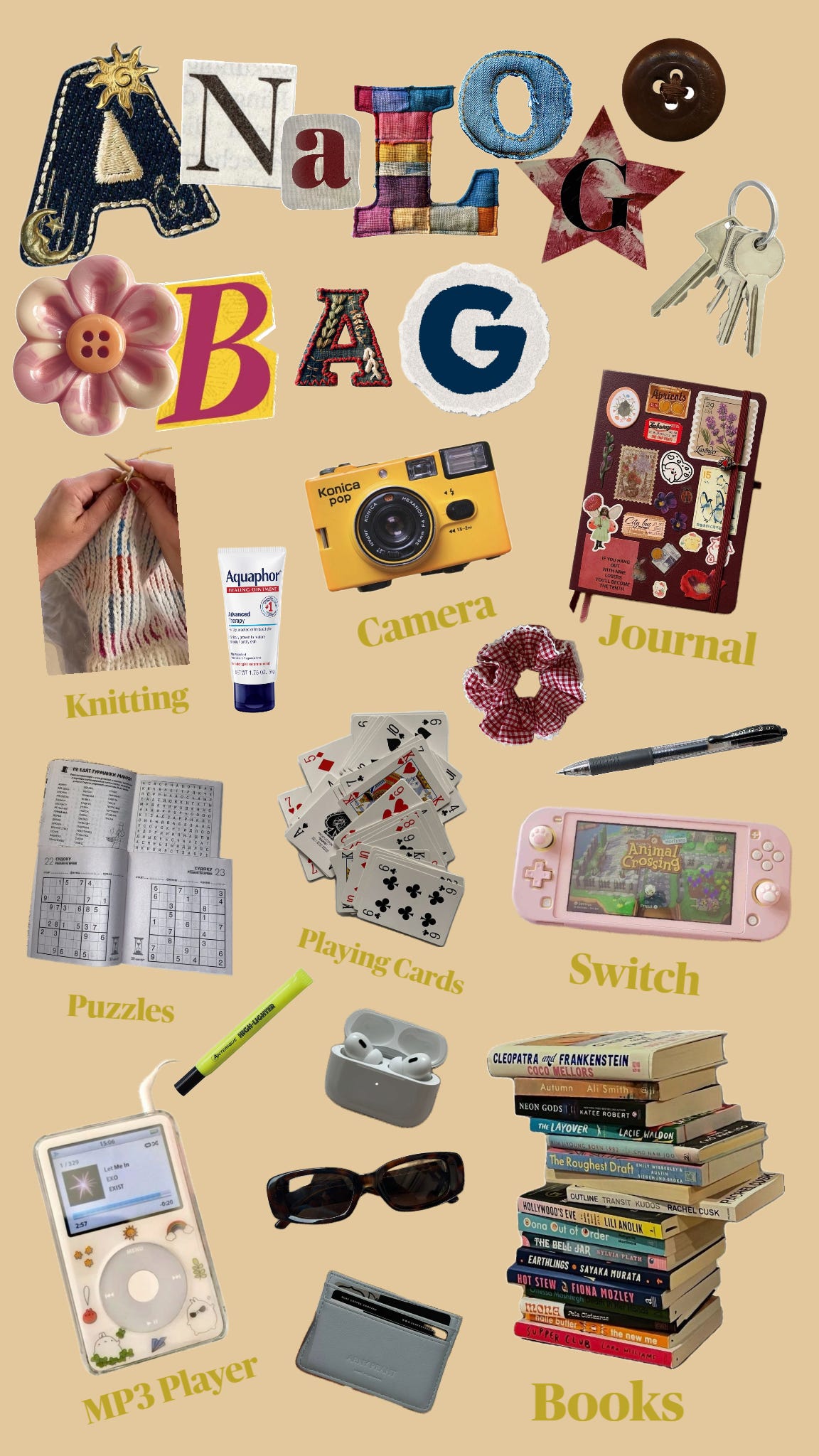
In this previously mentioned video, Ash Callahan puts it painfully accurately; “The whole idea of this trend, the branding of this trend is connecting with real people, going outside, anti-corporation, anti-capitalism, anti-consumerism, and yet, ‘unbox my new iPod nano with me’.”
Yikes.
While I’m not going to shame anyone for subscribing to a certain aesthetic, the truth is that this trend, while it may have started with pure intentions, is yet another avenue for consumerism; a new line of products to sell you a state of being; one we are all craving in this disconnected, overwhelming, overstimulating, anxiety inducing late stage capitalist world.
But nothing on the market can address the root cause of these symptoms. Getting off your phone, while it might significantly help, won’t cure your anxiety. I’ve had to learn this the hard way this past week since I switched back to my flip phone. With no way to constantly divert myself from my emotions, I have felt more anxious than before. However, not having a smart phone to distract me has given me the space to start to sort out my feelings. I have begun journaling and meditating more consistently, and have, obviously, been writing more.
One week in, I don’t feel better, but I feel more aware, and I have no regrets about ditching my smart phone.
But if you’re not ready to take that jump, or if that’s not an option for you, there are other ways to go about this lifestyle change.
De-centering Our Phones
In Jose Briones’ article; Is Offline the new luxury? He makes a lot of interesting counter points to this discussion. At the beginning he states; “There’s a popular myth circulating in wellness spaces and tech-adjacent circles: “offline is the new luxury.” It’s a seductive notion. One that frames disconnection as a rare privilege reserved for economic elites. But that framing is misleading. Disconnection isn’t a luxury; it’s a choice. A difficult one, yes, made harder by systems designed to commodify our attention and tether us to convenience. But a choice nonetheless.” All of which I mostly agree on; anyone can spend less time online if they choose to. But even so, free time is hard to come by amidst hustle culture.
According to Hartmut Rosa’s social acceleration theory, as production ability speeds up, so does the expectation on our productivity as individuals, and thus time seems to move faster and faster as we become more and more efficient. This constant hyper activity sends us into social alienation, furthering the disconnection perpetuated by our phones. Jose goes on to say; “Tech giants persuaded us to trade away our data for convenience, then monetized that exchange. What we get in return is an endless feed that’s designed not to inform or inspire us. It’s meant to entrench our preferences and softly steer us toward products, subscriptions, and ideologies we’re already halfway sold on (by them….).” Every minute we’re online is a minute they are collecting data and monopolizing our attention. In this way, though it doesn’t feel like it, we are being productive when we are doom scrolling. Not for our own gain; but for theirs.
In a brilliant video by @struthless titled, replacing your phone is easy when it feels punk, he states: “I like the idea of burning your own money as an act of protest. I like the subversion of power. Instead of fearing the ruling class, or complying in advance, you make them fear you. You remind them that not only do you actually have what they want, but you also have agency.” Spending time offline, and being unproductive is like burning money, because time is money after all. Refusing to be online, even for a minute, is refusing to be exploited by capitalism; it’s a protest.
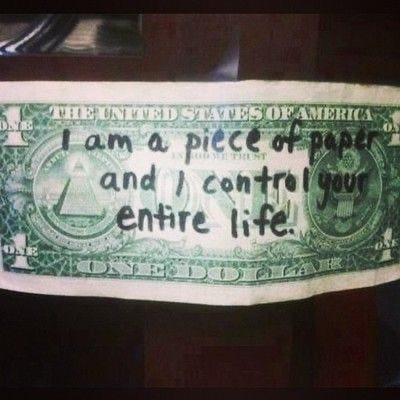
The smart phone isn’t just a convenient tool for its user, but a brilliant one for its creators. It’s the ultimate device for expedient social enslavement and social surveillance. The brilliant author, historian and chair member in sociology at Harvard University, Orlando Patterson, describes social enslavement as; “The external stripping of identity and individualism by re-naming, branding, and castration.” Is that what owning a smart phone, and especially using social media, will do if you’re not careful? Won’t it re-name you with the label it pipelines you into? Will it not brand you with an aesthetic? Doesn’t it, over time, castrate our ability to think critically? To live without convenience? To form real world connections? To come up with solutions with limited abilities and resources? And as such, disable us to pass these skills down to our children?
It’s a harsh analogy, but the reality is the more you passively consume your phone, the more it actively consumes you. That doesn’t mean you have to let it. At the end of the day, you are the only one that can control what they most desperately want; your time and attention.
Which is why I think I think this trend, despite the problematic aspects, could overall be beneficial. When implemented in a functional way, reframing our relationship with tech could be life changing for so many people.
You don’t need to buy anything to start. You don’t even need to get rid of your smart phone; systems like digital minimalism, and intentional content consumption like digital gardening can help you take your autonomy back and use it as a tool, instead of it using you.
So if you want to de-center your phone, consider what you are reclaiming in doing so. If you want to spend less time online, focus on what you’re going to do instead; Make art, make love, wander aimlessly, be messy and, most importantly; be completely unproductive.
I hope this article inspires you to consider how you can take more agency over your life, as many of the sources linked here did for me.
P.S. I wrote this essay with my flip phone on silent and while alternating between playing classical music on my radio and The Marias on my iPod knock-off. And still felt anxious during much of the process. Life is unfortunately an intrinsically nuanced place.
P.P.S I started using Sublime for collecting media related to my essays. Here’s a link to my Digital Minimalism Collection which has all the links I included here, as well as some that I didn’t.
Great article! Agreed on the business side of digital minimalism. Many seem to think that buying something will solve their issues (I know I once did). In reality, it is returning to community, lived experiences, and small pleasures like walking or reading that actually "solve" the screentime issue.